Start with a defined result, editable geometry and an exact illustrative equipment list. Keep untested outcomes and unknown material/setup facts visible.
These are authored planning examples, not photos or reports of firsthand production. No machine purchase, paid course or promised selling income is required to use them.
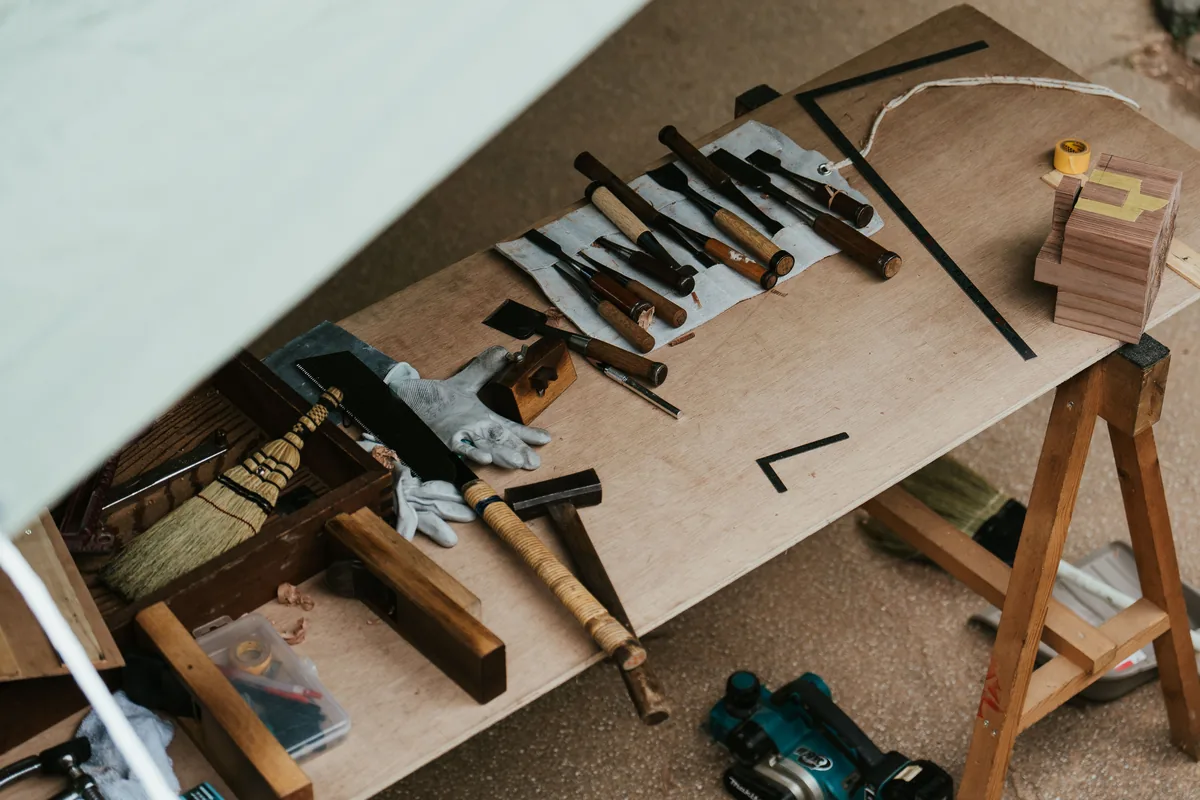
Traditional woodworking context, not a project made or tested with any listed machine. Photo: G N / Pexels
Original unmanufactured basswood investigation. Dashed path inset0.5mm; canvas, path and finished dimensions are different.
An editable 100 × 60 mm canvas for a flat label outline; add only artwork/type you have rights to use.
Illustrative cutting investigation. Exact stock composition, grade, coating, thickness, settings, holding and finish remain unresolved. The B1 power label and a broad basswood claim are not a tested recipe.
Original unmanufactured metal investigation. Dashed path inset0.5mm; canvas, path and finished dimensions are different.
An editable 60 × 20 mm placement canvas for a marking layout on a separately sourced blank.
Illustrative marking investigation, not a metal through-cut claim. Exact alloy, coating, field lens, source variant, work area, focus and process quality remain unresolved.
Original unmanufactured acrylic investigation. Dashed path inset0.5mm; canvas, path and finished dimensions are different.
An editable 80 × 50 mm panel-outline canvas for discussing a small flat design.
Illustrative material/process investigation. A generic acrylic statement does not establish a particular clear grade, thickness or cut/finish quality. Keep a no-purchase design path until exact documentation resolves it.